in a scenario where cross-border business and local deployment are both important, choosing a suitable high-speed server in thailand is crucial. this article systematically explains how to select a thai high-speed server that meets your needs from the dimensions of demand analysis, network quality, hardware, and operation and maintenance to ensure a stable and low-latency experience and facilitate seo and localized retrieval.
before selecting a high-speed server in thailand, first clarify the business type, concurrency, traffic pattern and disaster recovery requirements. determine key performance indicators such as cpu, memory, disk io, and bandwidth limit based on the application to achieve demand-driven configuration, avoid resource waste or performance bottlenecks, and improve the predictability of low-latency experience.
bandwidth not only depends on the peak value, but also on link stability, congestion rate and operator interconnection conditions. give priority to suppliers that provide measurable bandwidth, support flexible expansion, and have multiple exits. testing true peak and sustained bandwidth can avoid increased latency due to link jitter.
use tools such as ping, traceroute, and mtr to measure the rtt and routing path to the target area, and combine long-term monitoring data to observe jitter and packet loss. configuration alarms and historical trend analysis can promptly locate link problems and ensure that thailand's high-speed servers maintain low latency under actual business loads.
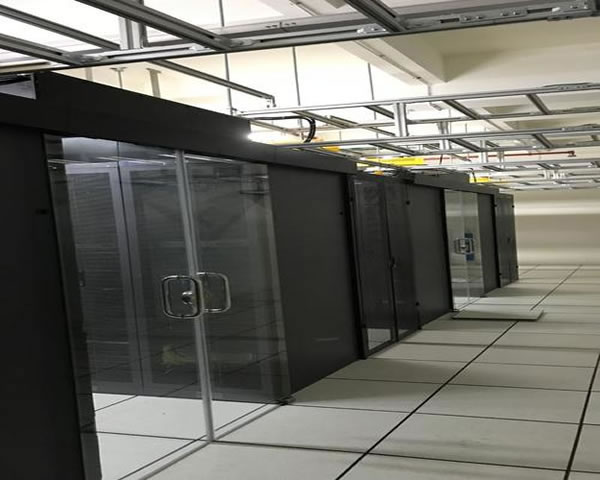
the computer room is close to users or major switching nodes, which can directly reduce physical transmission delays. examine whether the computer room is connected to the main local backbone and international transmission points, and whether it is redundant with multiple operators to reduce the risk of single point failure and improve overall network availability and stability.
choose the appropriate cpu architecture, memory capacity, and disk type (ssd/nvme) based on the application. focus on iops, read and write latency, and scalability options. solutions that support online vertical or horizontal expansion are more conducive to maintaining a stable and low-latency experience of thailand's high-speed servers during business growth periods.
server selection should simultaneously evaluate ddos protection, network acl, backup mechanism and disaster recovery capabilities. whether the supplier provides 24/7 operation and maintenance response, log auditing and backup and recovery drills directly affects the fault recovery time and long-term stability, and is related to the continuity of low-latency experience.

carefully review the availability guarantees, network packet loss, and response time terms in your service level agreement (sla). before going online, we conducted stress tests, latency evaluations, and real user path tests to confirm that thailand’s high-speed servers can meet the promise of a stable low-latency experience under expected traffic.
summary and suggestions: when selecting high-speed servers in thailand, take business needs as the core and comprehensively evaluate network links, computer room interconnection, hardware, and operation and maintenance guarantees. through quantitative testing and strict sla comparison, we select a supply solution that can provide stable bandwidth, low packet loss and rapid response to ensure a continuous low-latency experience and reduce operational risks.
- Latest articles
- Community Q&A Summary: Are US Servers Offline And Common Recovery Experiences Nowadays?
- Recommendations For Establishing Audit And Security Incident Response Processes For High-defense VPS Logs Without Filing In Hong Kong
- From The Perspective Of SEO Optimization, Are Cambodia Servers Useful? Their Potential Impact On Rankings
- Analysis Of The Impact Of The U.S. Cluster Server Bandwidth Billing Model On Long-Term Costs
- How To Temporarily Scale Up During Peak Activity By Purchasing A Korean Cloud Server For One Day
- An Operations Perspective Analyzes The Key Points Of High-availability Architecture And Disaster Recovery Design For High-protection Servers In The United States
- Common Customer Questions And Strategies For Promoting Japanese Cloud Servers
- Experts Provide A Detailed Overview Of Several Common Deployment Methods For Hong Kong Server Clusters In The Market
- How Much Does Broadband Cost In Hong Kong Data Centers Compare To Domestic And International Network Latency?
- The Law Reminds Chinese People On How To Trade On Korean Servers And Pay Attention To Compliance In Cross-border Transactions
- Popular tags
-

Are There Chinese Servers In Thailand? Summary And In-depth Interpretation Of Faqs On Zhihu
this article summarizes common questions and answers on zhihu about "are there chinese servers in thailand?" and provides in-depth interpretations, covering physical machine and ip concepts, filing compliance, network performance, deployment strategies and selection suggestions, to help readers choose a server solution reasonably between thailand and china. -
How The Technical Team Quickly Located The Fraudsters’ Servers In Thailand And Preserved Evidence
A Practical Guide for Technical Teams: How to quickly locate the server of a fraud case in Thailand and preserve evidence, covering key points such as initial detection, IP and ASN tracing, confirmation of the hosting provider, evidence mirroring and chain preservation, and collaboration with Thai law enforcement or hosting authorities. -

The Warning In The Video Exposing The Thai Computer Room Fraud Case
the warnings in the video of thailand computer room fraud cases are revealed to help users identify and prevent online fraud and improve security awareness.